
Privacy-first architecture Minimal data retention No Google OAuth by default

Why Better Intimacy is safer than storing your relationship history in public LLM accounts.

Public chat LLMs are powerful, but they are not relationship-specific privacy systems. Better Intimacy is built to keep sensitive relationship context scoped, revocable, and as identity-light as practical.

This page is informational and product-focused, not legal advice.

  • Data scoped to relationship workflows, not open-ended chat history.
  • Identity-light sign-in options reduce third-party identity exposure.
  • You control sharing, revocation, exports, and deletion.
Need-to-know data
Security design keeps only the data required for a specific operation.
Scoped collaboration
Partner access is bounded by role and explicit sharing choices.
Identity minimization
Use nickname-first workflows and avoid tying relationship data to public identities.
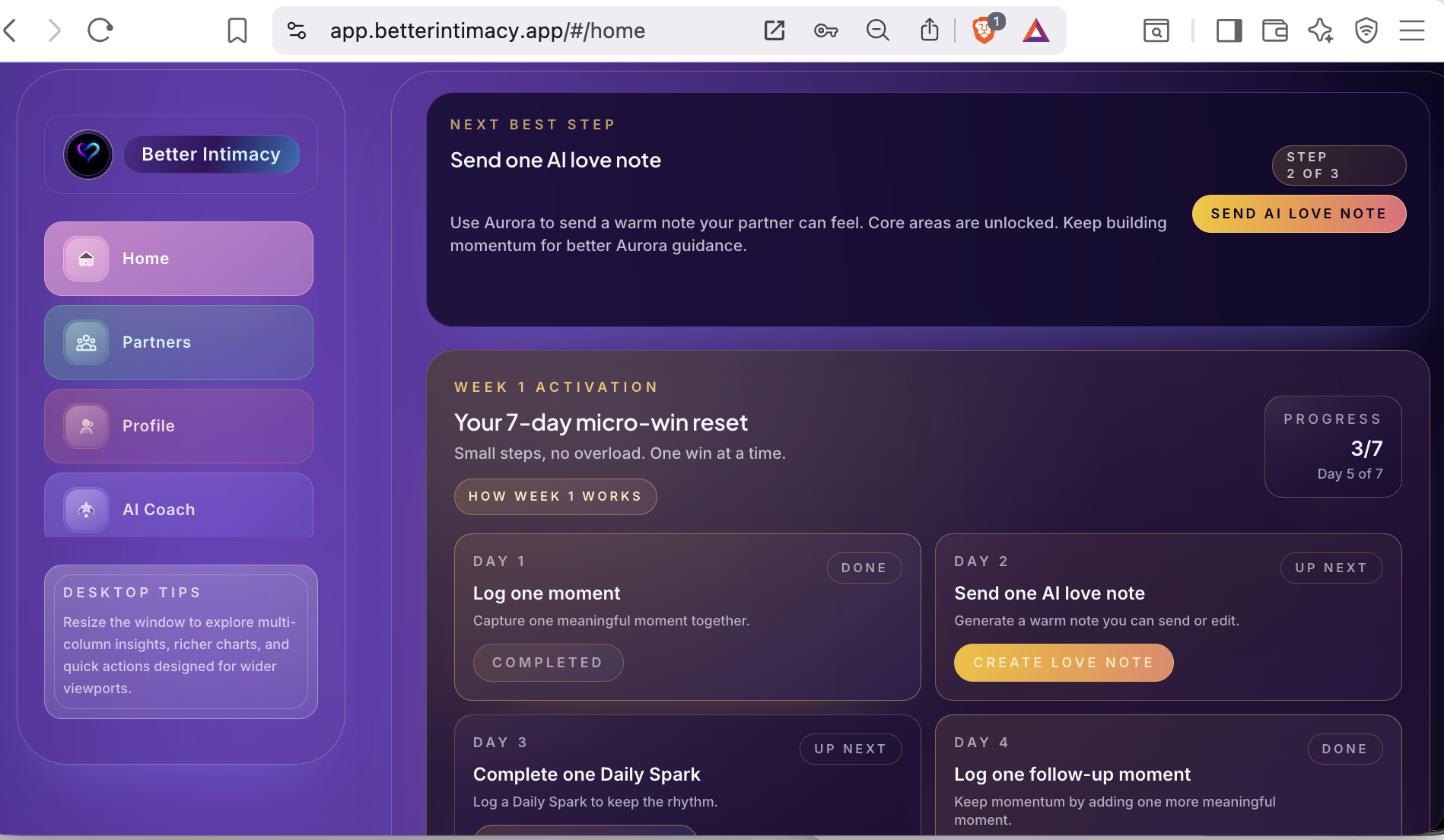
Better Intimacy home and timeline view

Public LLM account vs Better Intimacy workspace

Both can generate text. Only one is purpose-built for relationship privacy boundaries and controlled sharing.

Public-facing LLM account

Great for general prompts, risky for accumulated intimate history

If users paste sensitive relationship timelines, names, and conflict details into one general account, a single account compromise can expose a large personal dataset.

  • Open-ended chat archives grow quickly and can accumulate sensitive context.
  • Identity is often directly tied to a broad consumer account footprint.
  • Not designed as a partner-scoped relationship workspace.

Better Intimacy

Relationship OS with privacy boundaries by design

Built specifically for couple workflows: scoped sharing, role-based access, AI guardrails, and data controls tuned for intimate context.

  • No Google OAuth by default to reduce third-party identity linkage.
  • Identity-light paths (nickname/login handle/passkey) support lower-disclosure usage.
  • Private by default with explicit sharing and revocation controls.

Best practice

Use public LLMs for generic tasks, keep relationship data in Better Intimacy

This split gives you broad AI utility without centralizing sensitive relationship memory in a single public account history.

  • General writing and brainstorming can stay in public tools.
  • Relationship-sensitive logs and patterns stay in a scoped system.
  • Data ownership controls remain practical: export, backup, revoke, delete.

Security principles

Design for least exposure, not maximum data collection.

Better Intimacy follows privacy-first product patterns so relationship data remains useful without becoming identity-heavy.

Data minimization

Capture the minimum useful context for each operation instead of collecting broad personal identity profiles.

Nickname-first identity

Users can operate with non-public identifiers so relationship history is less tied to real-world account identity.

Scoped visibility

Partner and collaborator views are role-aware. Shared surfaces are intentional, private surfaces remain private.

User control

Export, backup, restore, sharing revocation, and deletion controls are first-class, not hidden.

How the privacy model works in practice

A simple workflow keeps sensitive context bounded at every step.

1

Capture only needed signal

Moments, tags, and lightweight context are captured to support specific relationship workflows.

2

Process in a guarded domain

Aurora guidance runs in a relationship-specific flow with privacy and sharing boundaries.

3

Share by explicit intent

Nothing is auto-public. You choose what is shared, with whom, and for how long.

4

Revoke and export anytime

If trust, context, or relationship status changes, controls exist to revoke access and keep ownership.

Aurora guidance

Guided help

Replay first-use guides from Settings and keep only the help that actually earns adoption.

Aurora guidance

Start small with Daily Spark

Daily Spark is the fastest way to build momentum without overthinking the app.

Start Daily Spark

Aurora guidance

Use AI Coach for clarity, not pressure

AI Coach works best when you treat it like a calm planning partner. Start with one real question and let it help you find your next move.

Start with connection

Aurora guidance

Choose the lens that matches the kind of support you want

The insight lens changes the tone of Aurora's guidance before you generate anything.

Keep it faith-aware

Privacy FAQ

Clear answers about identity, storage, and when to use each type of AI tool.

Do I need to use a real email identity?

Privacy-first sign-in paths can use login handle/passkey patterns and avoid requiring a personally identifying email. If email is used, it does not need to expose your real-world identity.

Why avoid Google OAuth by default?

OAuth can increase third-party account-linking exposure. Better Intimacy prioritizes lower-disclosure identity paths for sensitive relationship workflows.

Are public LLMs bad?

No. They are excellent for many tasks. The issue is storing large volumes of intimate relationship context in a broad general-purpose account history.

Can I keep ownership of my data?

Yes. Better Intimacy includes export/backup controls and scoped sharing so your relationship history stays under your control.

Use AI without turning your relationship into an open data trail.

Start with a private relationship workspace and keep public AI tools for generic tasks.